Colombian Roots and Flavors: The Bandeja Paisa

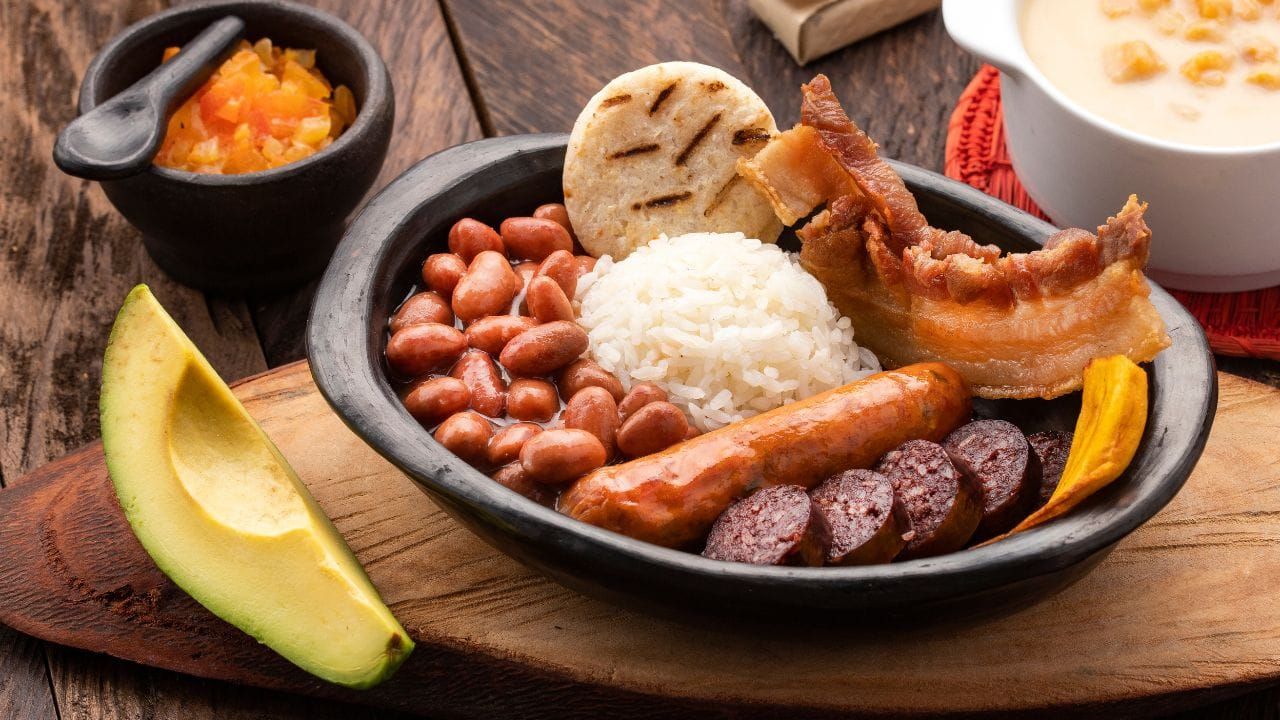
Reprinted with permission from Astuviaje Gourmet and shared by our Ambassasdor from Colombia, Tatiana Mejia.
There's no better way to start exploring beautiful Colombia than with its most iconic dish: the bandeja paisa. If you're visiting Colombia, this hearty meal is a must-try.
The origins of bandeja paisa go back to the 19th century in the Antioquia region, which includes the departments of Antioquia, Caldas, Risaralda, and Quindío in northwest Colombia. Back then, local farmers worked long, exhausting days, and they needed a high-carb, filling meal that would give them the energy to keep going. That's how this dish was born - packed with more than ten ingredients: beef, crispy pork rind ("chicharrón"), a local sausage called "chorizo," a fried egg, white rice, Antioquian beans, a thick arepa, ripe fried plantain or "patacón," avocado, and a flavorful tomato and onion sauce called "hogao."
There's also an interesting theory connecting bandeja paisa to Jewish cuisine. After World War II, many Jewish families who had converted to Christianity came to the Americas. They brought with them culinary techniques and cultural influences. Some believe the arepa in the bandeja paisa resembles matzá (the unleavened bread eaten during Passover), and that the dish's idea of slow-cooked beans - like "cholent," a traditional Jewish Shabbat stew - might be a subtle influence. Additionally, during the Inquisition, authorities checked homes for pork, as a way to find if someone was secretly practicing Judaism. Over time, pork parts like chicharrón and chorizo became part of the dish as a cultural heritage forming in challenging times.
In 1950, the Colombian Hotel and Tourism Association (COTELCO) officially recognized bandeja paisa as a key regional dish for the country. They wanted to highlight Antioquia's rich gastronomy, and this plate was the perfect symbol - showcasing the variety of local ingredients and flavors. The name "bandeja paisa" comes from the idea of a hearty "tray" or "plate" of different foods - a typical regional "seco" (a stew with rice and meat) that included side dishes like fried plantain, patacón, or a thick arepa.
Since then, bandeja paisa has become a national icon. Its popularity grew, both in Colombia and worldwide, celebrated at food festivals, travel guides, and international media. Many even proposed making it the country's official national dish, though that idea has faced some debate due to Colombia's incredible diversity of regions and flavors - each with its own culinary identity.
More than a meal, bandeja paisa is a profound symbol of Colombia's cultural diversity. Every bite tells a story: indigenous ingredients like beans and corn, African influences in the crispy pork rind, and European touches in the rice and beef - all blending into a vibrant mosaic of flavors and traditions.
So, when you enjoy bandeja paisa, you're not just eating - you're experiencing Colombia's history, its roots, and the pride of its people. It's a true reflection of the warmth and richness of the paisa region and the entire country.
If you travel to Colombia, make sure not to miss it - it promises an unforgettable taste of Colombia's heart and soul!.